Site Visit to Catalonia: How a Mature Regional Bioeconomy Ecosystem Connects Policy, Research and Practice

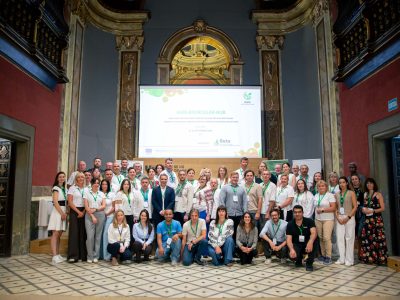
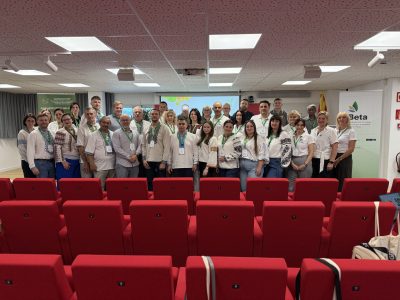
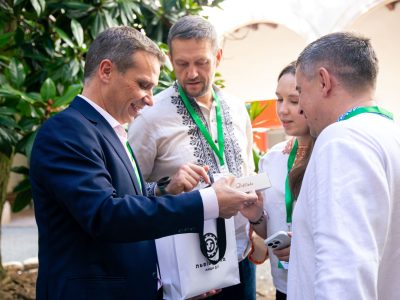
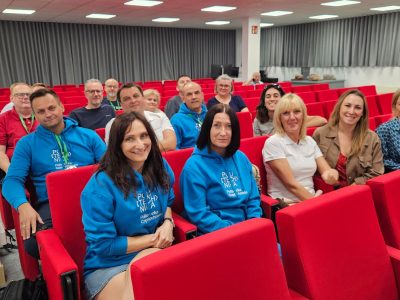
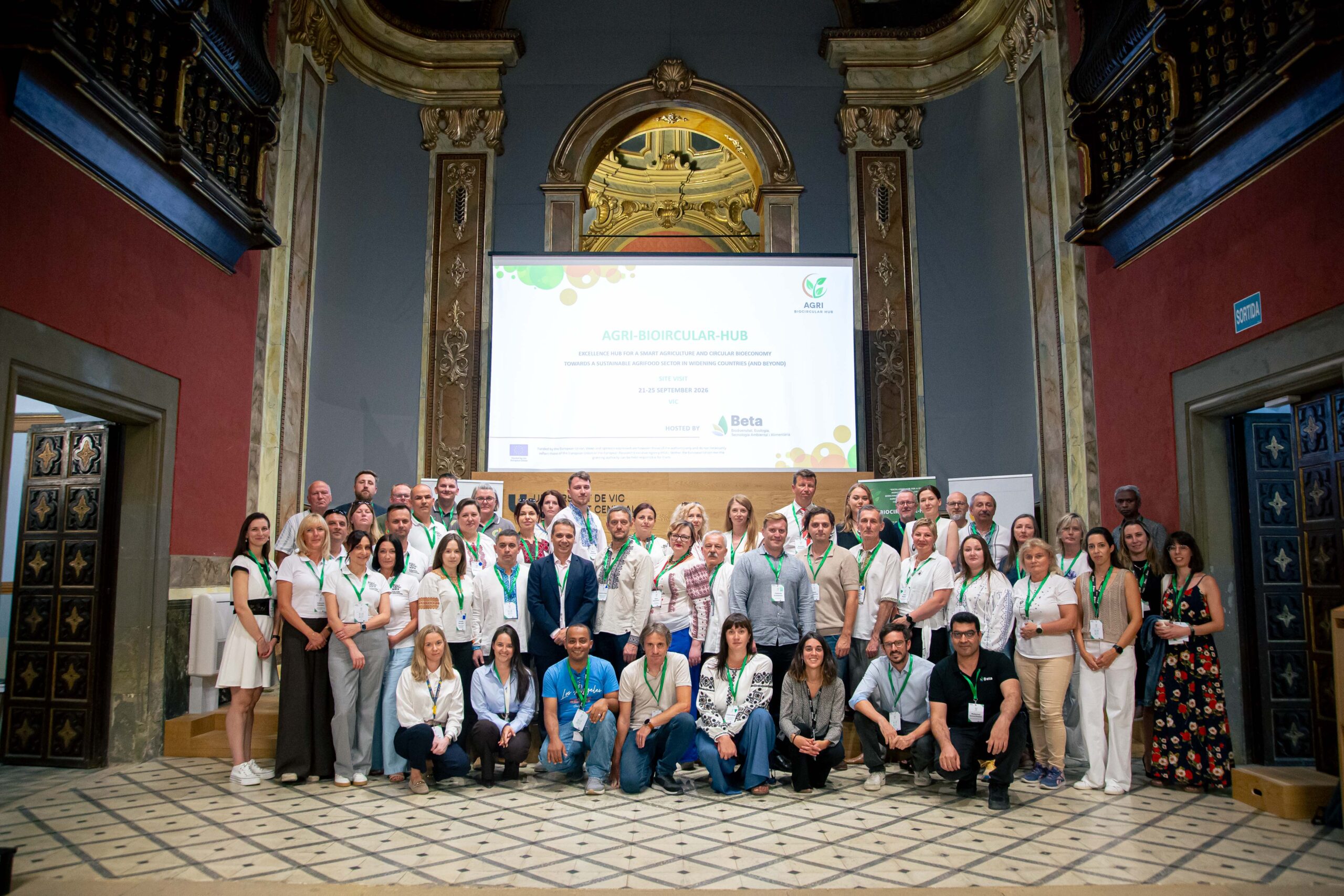
From 21 to 25 September 2026, the AGRI-BIOCIRCULAR-HUB consortium held a five-day site visit to Catalonia, hosted by BETA Technological Centre (BETA TC) in Vic and Lleida. Conceived as a strategic exchange between the territories involved in the project, the visit brought together the Government of Catalonia, project partners, regional R&I ecosystem actors from Ukraine, Poland and Latvia, and European experts.
- Dates
- 21–25 September 2026
- Location
- Vic and Lleida, Catalonia
- Host
- BETA Technological Centre
- Ecosystems
- Ukraine, Poland, Latvia, Catalonia
Catalonia was chosen as a reference region for a clear reason. Over the past decade, it has built a coherent bioeconomy ecosystem in which regional strategy, technology centres, clusters, cooperatives and farmers operate within a shared framework. For the AGRI-BIOCIRCULAR-HUB partners, the visit offered a rare opportunity to see this model from the inside. Participants could study not only the policy documents, but also the institutions, demonstrators and people that make it work.
AGRI-BIOCIRCULAR-HUB
AGRI-BIOCIRCULAR-HUB is a Horizon Europe project coordinated by Lviv Polytechnic National University, with partners from Ukraine, Poland, Latvia, Belgium and Spain. The project supports the development of place-based innovation ecosystems in the agri-food and circular bioeconomy sectors. One of its central tasks is mentoring an emerging ecosystem in Ukraine through knowledge exchange, ecosystem building and internationalisation. The site visit to Catalonia is one of the key knowledge exchange activities under this task.
- Day 1Institutional welcome
- Day 2From EU policy to territorial impact
- Day 3Biorefinery and GREENHOOD pilots
- Day 4Technical working sessions
- Day 5Network building
Institutional welcome and ecosystem presentations
The programme opened at BETA TC headquarters in Vic. After registration, participants were introduced to the objectives and scope of the site visit. They then took a technical tour of BETA TC’s laboratories and pilot sites, which gave a first impression of how applied research is organised at the centre.
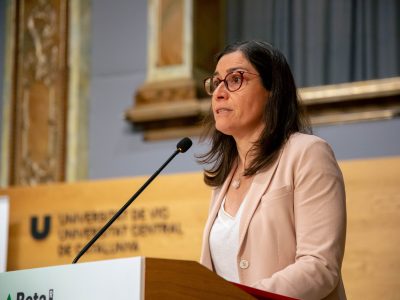
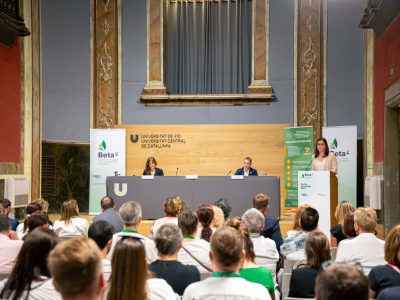
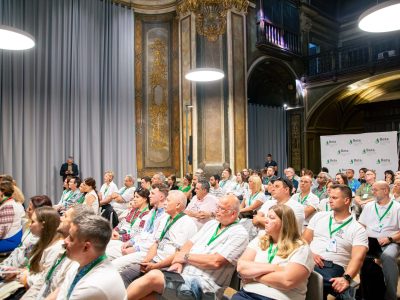
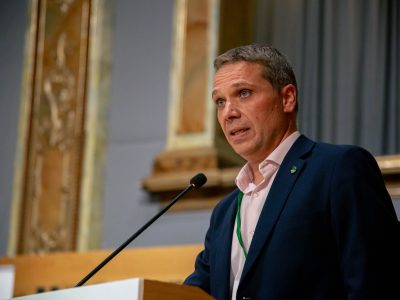
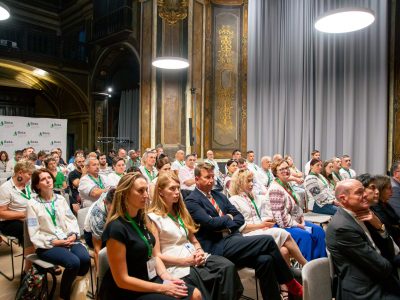
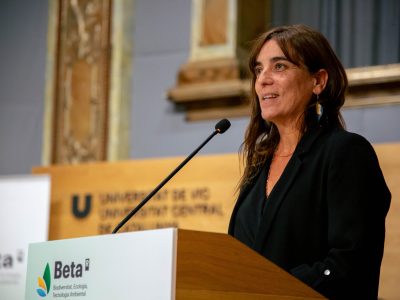
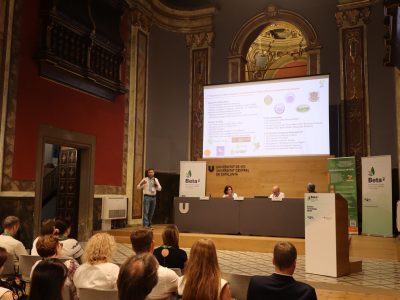
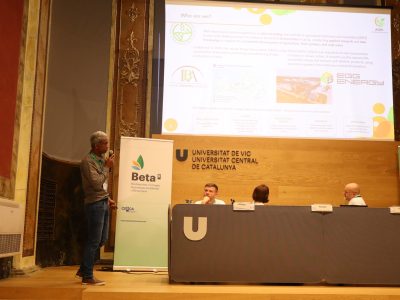
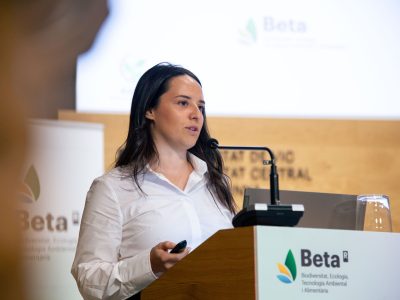
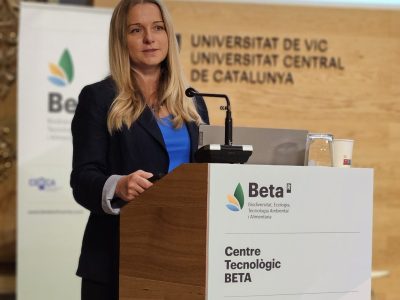
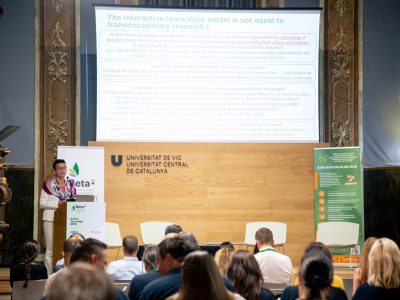
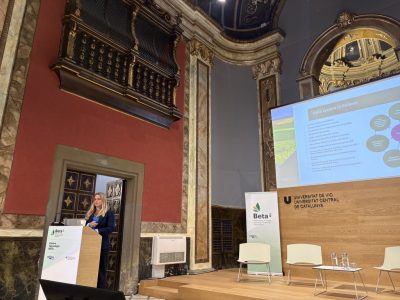
The afternoon session took place at the Paranimf of Casa Convalescència, one of the historic buildings of the University of Vic – Central University of Catalonia. Representatives of the three participating ecosystems, Ukraine, Poland and Latvia, presented their regional innovation landscapes, priorities and challenges. Sergio Ponsà, Director of BETA TC, then presented the centre’s mission and its role in Catalonia’s bioeconomy.
Institutional interventions
- Marta OteroRector, University of Vic – Central University of Catalonia
- Sergio PonsàDirector, BETA Technological Centre
- Núria MontserratMinister of Research and Universities, Government of Catalonia
The participation of the Catalan Government at ministerial level underlined the political importance of interregional cooperation in research and innovation.
Strengthening regional innovation ecosystems: from European policy to territorial impact
The second day was the most policy-oriented part of the programme. It traced the path from European frameworks to concrete action in the territories. After a welcome by Sergio Ponsà and an introduction by Ada Domingo, Coordinator of Science for Cooperation and Diplomacy at BETA TC, the discussion moved to agricultural knowledge systems.
Understanding AKIS
Agricultural Knowledge and Innovation Systems (AKIS) describe how knowledge flows between farmers, advisors, researchers, educators, businesses and public authorities. Under the current Common Agricultural Policy, EU Member States are required to strengthen their AKIS as part of their CAP Strategic Plans.
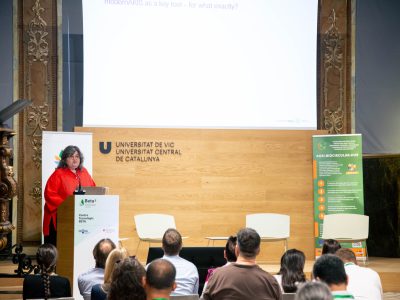
Inge Van Oost, independent senior expert in AKIS coordination and former European Commission official, presented the AKIS concept, the work of the SCAR-AKIS Strategic Working Group, and the respective roles of advisory, research, policy and practice actors. Elena-Teodora Miron, Head of the Competence Centre for Research and Innovation Projects at the Austrian Chamber of Agriculture and coordinator of the Horizon Europe project ModernAKIS, presented the project as a practical tool for modernising knowledge systems.
AKIS in four countries
A comparative session showed how AKIS is organised in practice across different national contexts.
- PolandEwa GrodzkaHead of the Knowledge Transfer and Advisory Unit, Ministry of Agriculture and Rural Development
- LatviaAiva Saulīte-LiniņaProject Manager, Latvian CAP Network Support Unit, Latvian Rural Advisory and Training Centre
- UkraineMaksym KobzystyiHead of the Knowledge and Innovation Transfer Directorate, Ministry of Agrarian Policy and Food of Ukraine
- SpainJuan Pedro Romero TruebaHead of Training and Technology, Ministry of Agriculture, Fisheries and Food
The comparison was particularly relevant for Ukraine. As a candidate country, Ukraine is building the structures that EU Member States develop under the CAP, and the experience of Poland, Latvia and Spain offers concrete reference points.
Smart specialisation in Ukraine
Smart Specialisation Strategies (S3) help regions concentrate research and innovation investment on areas where they have real competitive potential. Manuel González Evangelista, Economic and Policy Analyst at the European Commission’s Joint Research Centre, presented the EU’s role in advancing S3 in Ukraine. Rostyslav Tomenchuk and Nadiia Afanasieva of the Ukrainian Institute for International Politics followed with an overview of progress, challenges and next steps for smart specialisation in Ukraine.
Catalonia as a regional innovation model
The afternoon showed how Catalonia translates European policy into a regional framework.
- Brígida LorenzoHead of the Transformative Innovation Area, Department of Economy and Finance. Presented RIS3CAT 2030, Catalonia’s smart specialisation strategy, and its Shared Agendas.
- Míriam GonzálezTechnical Cabinet, Department of Agriculture, Livestock, Fisheries and Food. Presented the INNOVA 2030 Plan, the Catalan Bioeconomy Strategy and the Food Strategy 2025–2028.
- Antoni CruzProject Manager, BioHubCat. Introduced Catalonia’s one-stop shop for bioeconomy innovation.
BETA TC in action
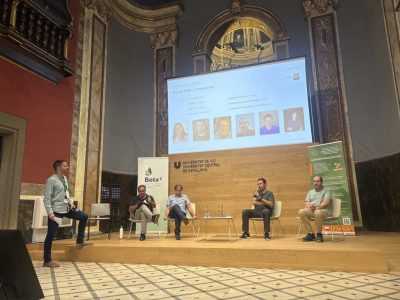
The final session showed the ecosystem at work. Following a presentation by Sergio Ponsà, two round tables moderated by Ricard Carreras, Head of Institutional Relations and Corporate Strategy at BETA TC, gave the floor to local actors. The first featured regional initiatives: Osona Biocircular, the Bioeconomy Network and the Catalan Nutrient Platform. The second brought testimonies from companies and cooperatives: Fertiebro, Mafrica, Deseuras S.A., Cooperativa Plana de Vic, Torre Santa Maria / Noguera Renovables and Roqueta Origen Winegrowers. Their experience showed how technology centres, businesses and farmers cooperate on shared bioeconomy challenges in everyday practice.
Biorefinery demonstrators and GREENHOOD pilots
Organised by the Horizon Europe project GREENHOOD as part of its Twinning Programme under the Capacity Building task.
The GREENHOOD Twinning Programme transfers knowledge to regions across Central and Eastern Europe and fosters peer learning among stakeholders. The joint day is a good example of cooperation between EU-funded projects working on related challenges.
At BETA TC in Vic, Alex Galí, Co-Head of the Environmental Technologies and Circular Economy Team, introduced the biorefinery concept and the GREENHOOD pilot at Torre Santa Maria. Mary Tsinou presented the BioEast HUB, which supports the bioeconomy in Central and Eastern European countries.
Participants then travelled to Lleida to visit the biorefinery demonstrators at the Torre Santa Maria pilot site, where several technologies are combined in one treatment chain.
- Anaerobic digesterConverts organic residues into biogas and digestate.
- Solid-liquid separatorSplits the digestate into fractions suited to different uses.
- Composting unitStabilises the solid fraction into a soil improver.
- Membrane contactorRecovers nutrients from liquid streams.
The visit continued at the Balaguer Wastewater Treatment Plant, where participants learned about nature-based solution pilots and the recovery of by-products from wastewater treatment. Seeing these technologies at full operating scale made the concept of circular nutrient management tangible for all participants.
AGRI-BIOCIRCULAR-HUB technical working sessions
The fourth day combined thematic knowledge exchange in two parallel tracks with the consortium’s own project work.
Technical and scientific track
From Circular Nutrient Recovery to Field Implementation: Integrated Pathways for Bio-Based Agricultural Innovation. Introduced by Mohamed Emran and Ahmad Abo Markeb, the session presented results from a portfolio of European projects led by BETA TC researchers.
- FERTIMANURECircular nutrient recovery and bio-based fertilisation pathways · Laura Díaz Guerra
- NUTRIBUDGETCircular nutrient recovery and valorisation · Yasmina Chourak
- SEMPRE-BIOAdvanced technologies for the valorisation of CO2 from biomethane streams · Jordi Llimós
- SEACUREAdaptive, site-specific implementation of soil-specific tailor-made fertilisers · Mohamed Emran
- DeliSoilTechnologies and living labs that turn food residues into soil improvers · Enric Garcia
The session ended with a joint, implementation-oriented discussion.
Business and public administration track
Knowledge in Action: Connecting Research, Business and Public Administration. Introduced by Queralt Güell of BETA TC, the session opened with Ricard Carreras on knowledge transfer between research, business and public administration. Two business clusters showed how they drive cross-sector collaboration: the Bioenergy Cluster of Catalonia, represented by Núria López, and the Catalan Meat and Alternative Protein Cluster INNOVACC, represented by Ariadna Montals. Cèlia Guixé presented the Catalan Nutrient Platform as an example of a cross-sector platform linking knowledge, industry and public policy. A participant-led discussion on experiences and challenges in different countries closed the session.
Consortium working sessions
The consortium then met in two dedicated working sessions. The first reviewed work package results and key project outputs to date. The second, From Project Results to Impact, focused on ecosystem internationalisation and exploitation strategies. Partners discussed how the project’s results can be taken up by regional ecosystems and how cooperation between the participating territories can continue beyond the project’s lifetime.
Network building and next steps
The final day at BETA TC was dedicated to consolidating the week’s learning. A reflection and discussion session allowed participants to share their main insights. Partners then agreed on the project’s next steps and gave feedback on the site visit, before an institutional closing and farewell.
What we bring home from Catalonia
- Policy coherence mattersCatalonia’s experience shows the value of aligning smart specialisation, bioeconomy and food strategies with sectoral instruments and support structures.
- Intermediaries are essentialTechnology centres, clusters and one-stop shops such as BioHubCat connect research with farmers, businesses and public authorities.
- AKIS is a shared European agendaDespite different starting points, Poland, Latvia, Ukraine and Spain face similar challenges in connecting knowledge actors, and comparison speeds up learning.
- Demonstration builds trustWorking pilots such as those at Torre Santa Maria and Balaguer make circular solutions concrete for farmers, investors and policymakers.
- Projects learn from each otherThe joint day with GREENHOOD showed how EU-funded projects can multiply their impact through cooperation.
What comes next
The insights from Catalonia will feed directly into the project’s activities. In particular, they will support the mentoring of the emerging place-based ecosystem in Ukraine and the consortium’s work on exploitation and internationalisation. The contacts established during the week with Catalan institutions, clusters, European experts and related projects will form a basis for further cooperation.
Funded by the European Union under Horizon Europe, Grant Agreement No. 101186869.