Building Community Capacity in Waste Management: Conference Held in Lviv Region under AGRI-BIOCIRCULAR-HUB

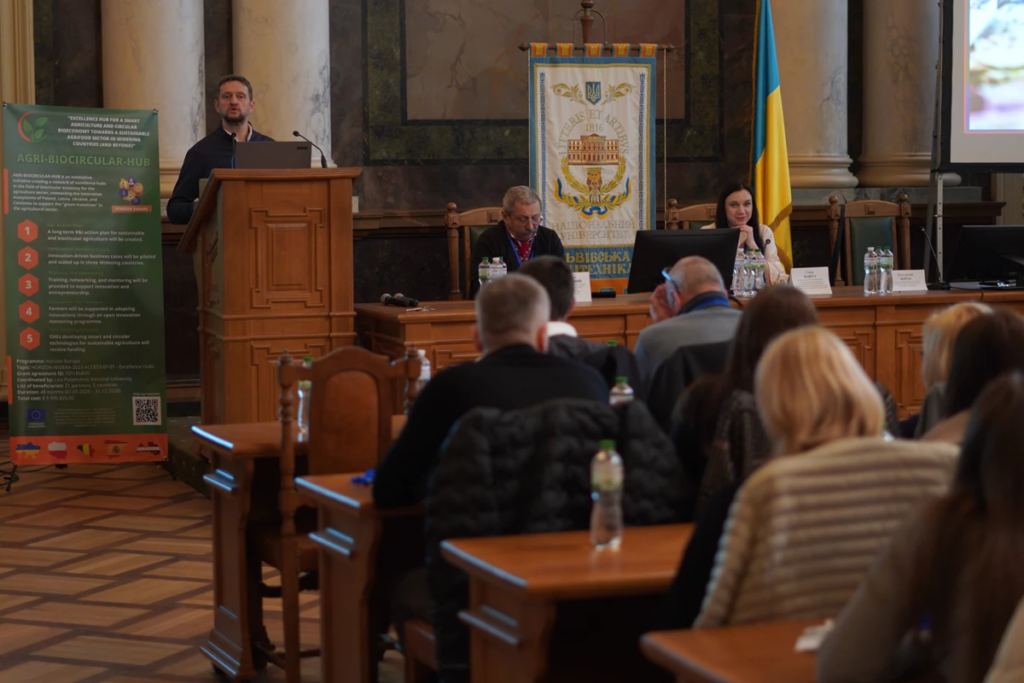
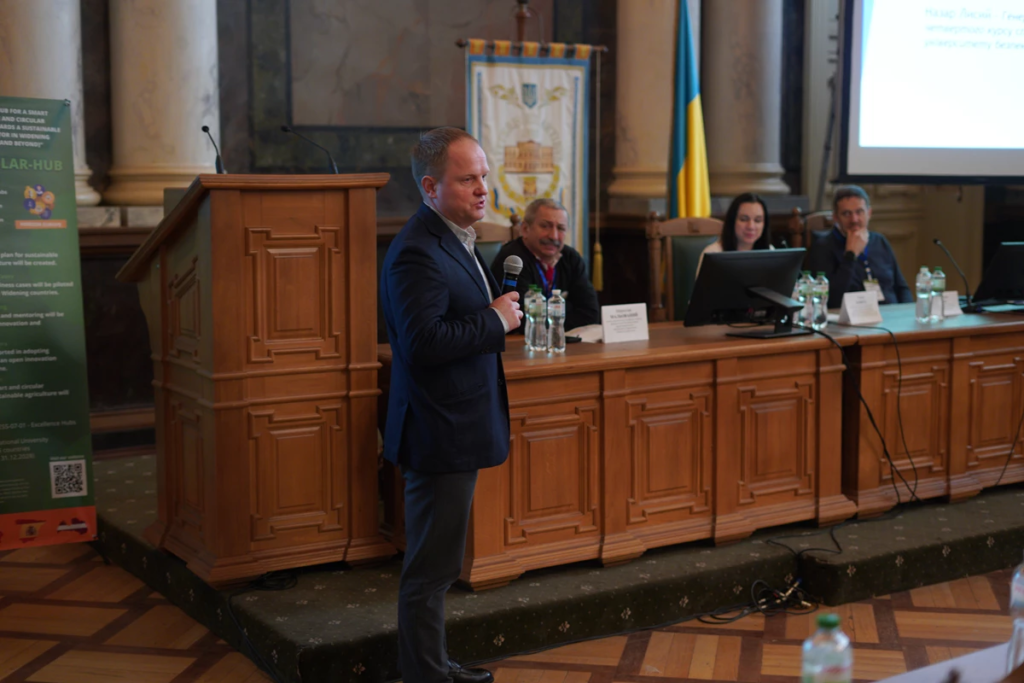
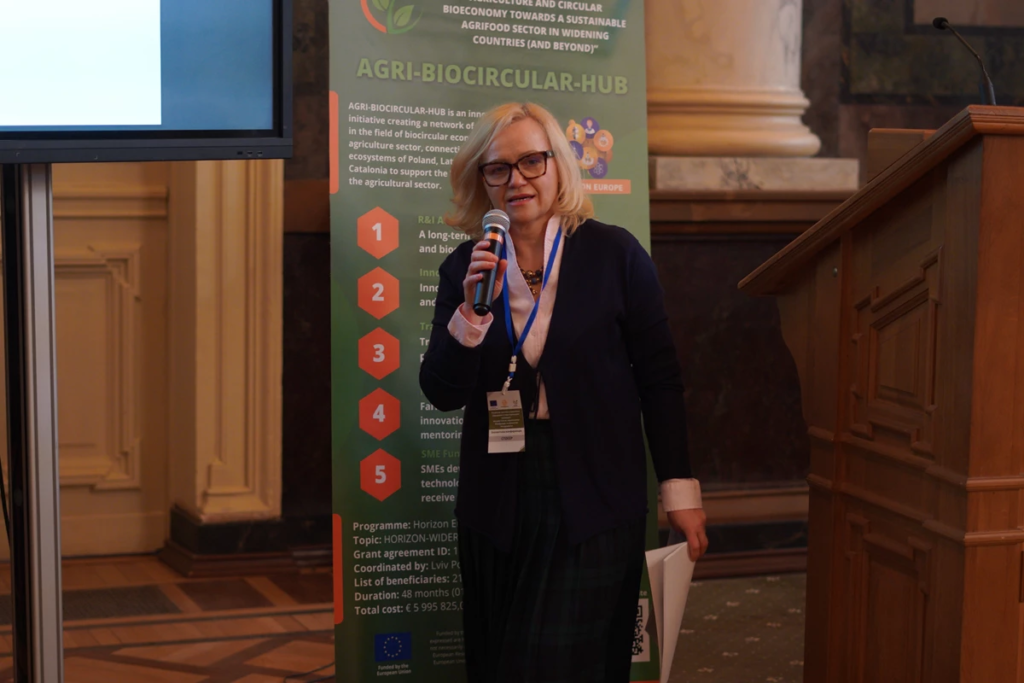
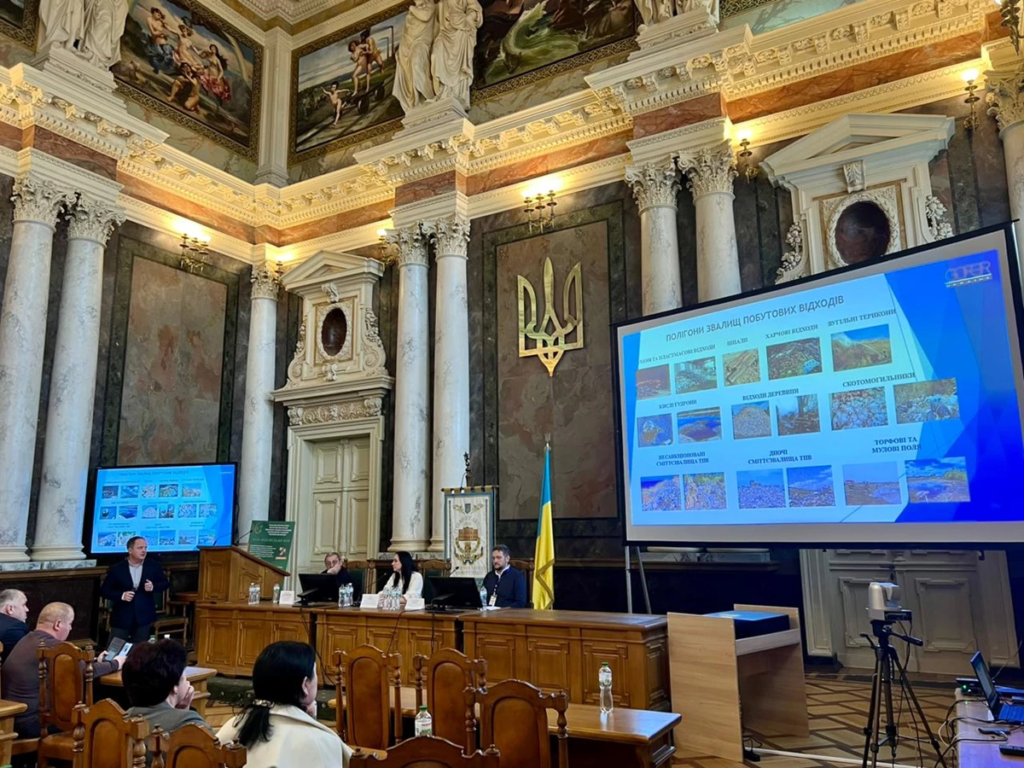
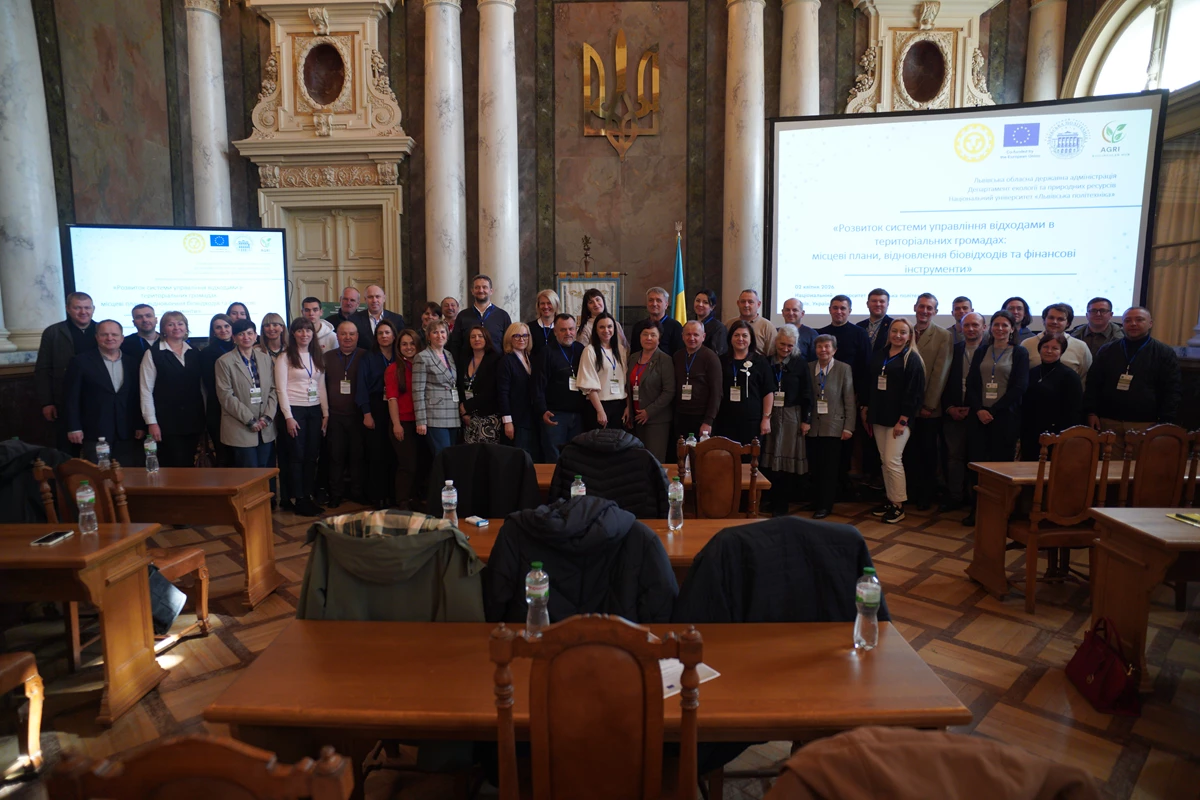
A practical conference on waste management systems development was held in Lviv as part of the implementation of the AGRI-BIOCIRCULAR-HUB project. The event was jointly organised by the Department of Ecology and Natural Resources of the Lviv Regional State Administration and Lviv Polytechnic National University. Titled “Development of Waste Management Systems in Territorial Communities: Local Plans, Bio-Waste Recovery, and Financial Instruments”, the conference brought together representatives of territorial communities, municipal enterprises, and educational institutions from across the Lviv region.
The event had a distinctly practical orientation. Participants came with concrete interests: developing local waste management plans, implementing effective bio-waste management solutions, and exploring international funding opportunities. The programme was structured to address each of these areas directly, combining presentations by regional authorities and sector specialists with open discussion.
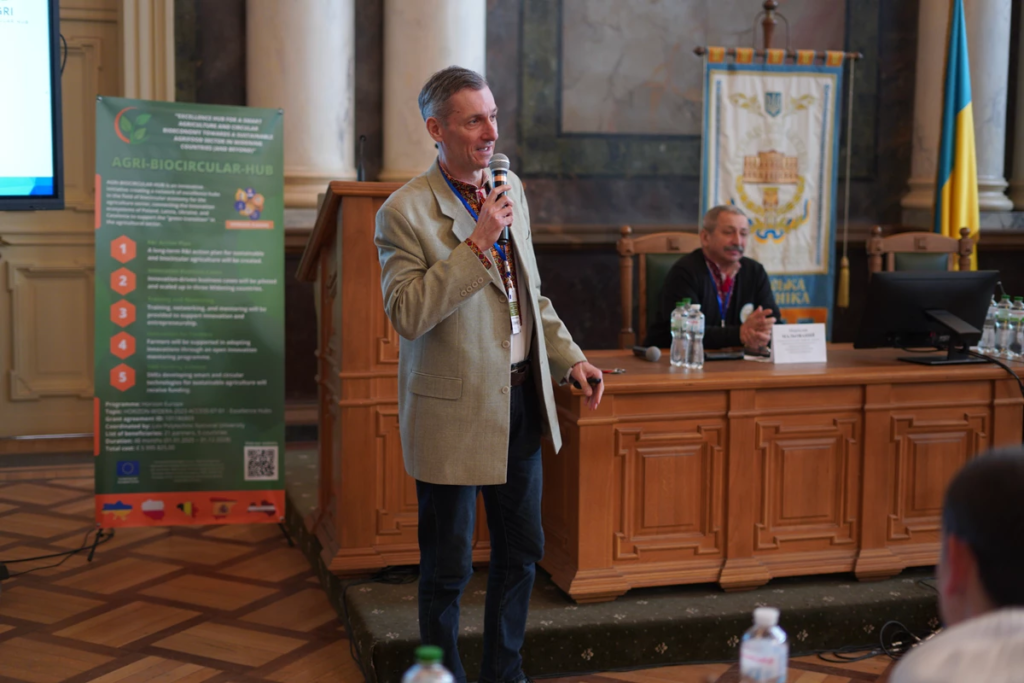
Volodymyr Korda, Director of the Department of Ecology and Natural Resources of the Lviv Regional State Administration, opened the substantive programme with a presentation on the key priorities of the Regional Waste Management Plan for the Lviv Oblast until 2034. He outlined the main tasks of its implementation and the strategic direction the region has set for building a more effective, resource-efficient waste management system at both regional and community level.
The conference covered three interconnected themes that are central to the AGRI-BIOCIRCULAR-HUB project’s work in Ukraine. First, participants examined the structure and key stages of developing local waste management plans, exploring how territorial communities can move from general commitments to operational frameworks with defined timelines, responsibilities, and indicators. Second, the conference devoted specific attention to the separate collection and recovery of bio-waste at the municipal level and to the management of agricultural waste as a resource rather than a disposal problem. This framing is directly aligned with the bio-circular economy principles that underpin the project: organic waste streams, whether from households, food processing, or agriculture, represent inputs for composting, biogas production, and soil improvement rather than liabilities to be eliminated. Third, participants were introduced to the range of European funding programmes available to support waste management system development in territorial communities, including instruments relevant to communities at various stages of planning and implementation.
The programme also included a presentation on tyre waste management by a representative of Hofer Ukraine LLC, who outlined modern processing approaches including pyrolysis technology, which converts end-of-life tyres into secondary raw materials. This example illustrated how circular economy principles can be applied not only to organic and agricultural waste streams but to industrial and municipal waste flows as well, extending the scope of what resource recovery can achieve at the community level.
Commenting on the outcomes of the event, Volodymyr Korda noted that joint work of this kind allows communities to develop a shared vision for their development, identify practical steps for implementing modern waste processing and management technologies, and build the partnerships that make long-term change possible. Events of this kind, he emphasised, give communities the opportunity to integrate innovative solutions into their waste management systems and lay the groundwork for the sustainable and environmentally responsible development of the region.
The conference is part of the broader capacity-building and knowledge transfer work that the Ukrainian ecosystem of AGRI-BIOCIRCULAR-HUB is conducting through Lviv Polytechnic National University and its partners, including the Lviv Regional State Administration, the municipal enterprise Green City, and the All-Ukrainian Environmental League. By engaging directly with territorial communities and municipal practitioners, the project is working to ensure that bio-circular approaches to waste management move from concept to local implementation, supported by the planning frameworks, technical knowledge, and funding connections that communities need to act.
AGRI-BIOCIRCULAR-HUB is funded by the European Union under Horizon Europe (Grant Agreement No. 101186869). The project connects research, innovation, and practice across Poland, Latvia, Ukraine, Belgium, and Spain to advance smart agriculture and circular bioeconomy in widening countries.