
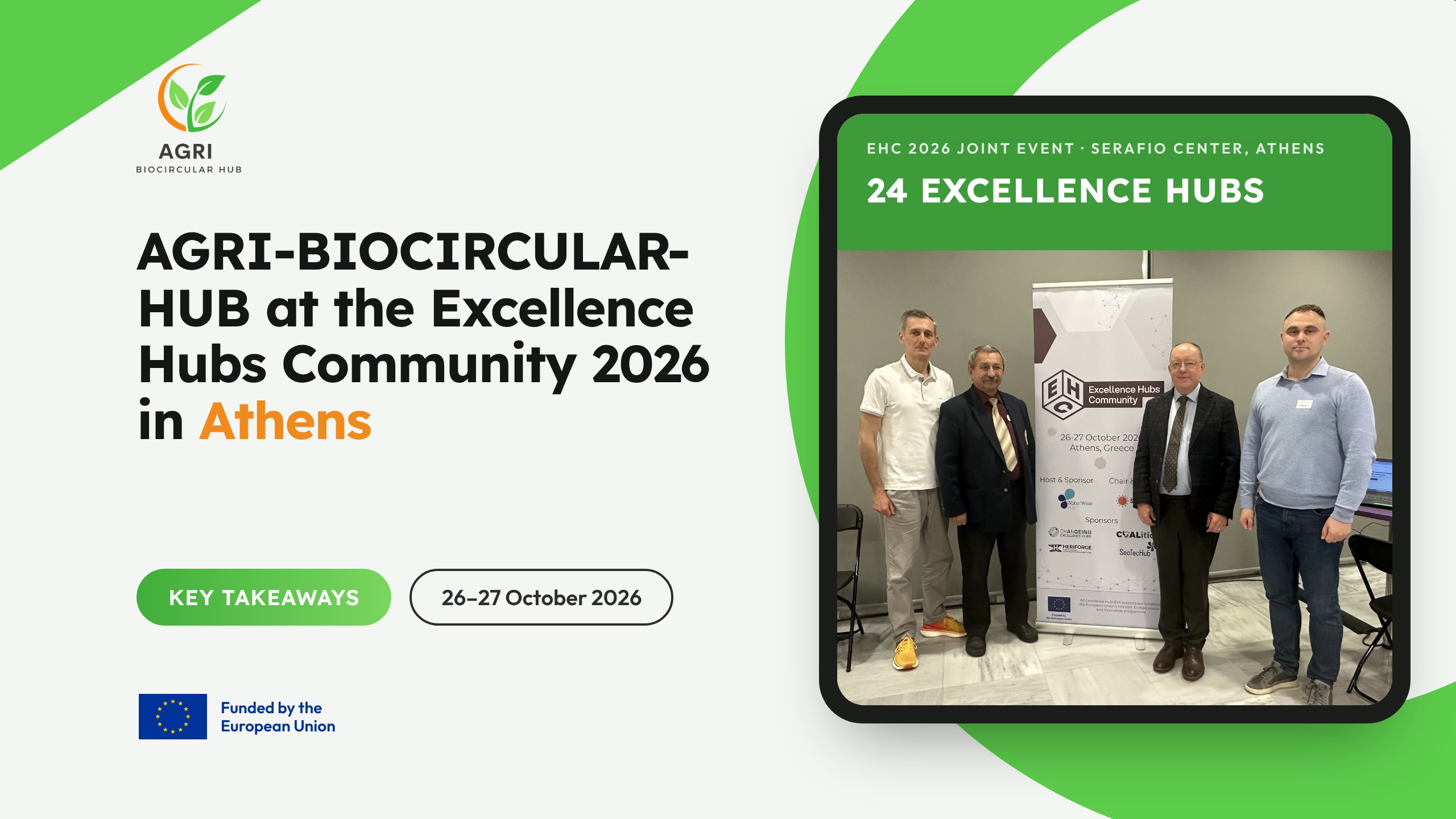
Excellence Hubs at a Turning Point: Key Takeaways from the EHC 2026 Joint Event in Athens

On 26–27 October 2026, the Serafio Center in Athens hosted the Excellence Hubs Community (EHC) 2026 Joint Event. More than 100 participants registered, representing Excellence Hubs, National Contact Points, the European Commission and the European Research Executive Agency (REA).
Lviv Polytechnic National University, the coordinator of AGRI-BIOCIRCULAR-HUB, was represented by Project Coordinator Myroslav Malovanyy, Project Manager Nazariy Andrushchak and Technological Manager Volodymyr Zhuk.
A community-driven format
The Hubs organised the event themselves. Derek Baker (SolarHub) chaired it, WaterWise hosted it, and CHAngeing was among the organisers. Several projects sponsored individual sessions. Over two days, 22 Excellence Hubs presented their results in thematic sessions, each presentation followed by a Q&A:
- Water and AgriFood
- Health and Well-Being
- Blue Economy
- Energy
- Digital Technologies
- Advanced Technologies
This structure made it easy to compare approaches across very different fields. It also showed that the Excellence Hubs instrument is maturing into a real community of practice, not just a set of separate projects.
Where the instrument stands
Two institutional presentations set the context.
- European Research Executive AgencyDeirdre FurlongHead of Sector, Widening Participation unit, REAPresented the main findings of REA’s 2026 survey of Excellence Hubs projects and the approach to the 2027 evaluation.
- European CommissionJoerg NiehoffDeputy Head of Unit, Directorate-General for Research and InnovationSpoke about policy aspects of the instrument and its outlook under the next Framework Programme for 2028–2034.
The message for Hubs funded under the 2024 call is clear.
Results are being assessed systematically. Evidence of impact gathered now will shape both the evaluation and the place of Excellence Hubs in the next Framework Programme.
The national perspective came from Vasiliki Kalodimou of the Greek NCP network (PRAXI Network, FORTH) and from Çağrı Yıldırım, Head of the EU Framework Programmes Department at TÜBİTAK (Türkiye).
Sustainability beyond EU funding
The question that ran through the whole event was what happens to a Hub when its grant ends. Parallel break-out sessions covered Project Sustainability, Community Engagement, the Water-Energy-Food-Ecosystems (WEFE) nexus, the Blue Economy cluster and how to put health innovation into practice.
An interactive NCP session, chaired by Maria Szlachta (Polish NCP), looked at how Excellence Hubs can:
- stay sustainable beyond EU funding;
- connect with national and regional support schemes;
- build synergies with other WIDERA and Horizon Europe instruments;
- extend their impact beyond the original consortium;
- contribute to long-term regional innovation ecosystems.
From Athens to Brussels
A dedicated session on the second day collected structured feedback for the European Commission. CHESS and SolarHub co-organised it. Participants worked in small mixed groups of six to eight people, with members of the same project spread across different groups. Each group discussed four questions:
- What worked particularly well in the Excellence Hubs instrument?
- What should change for future Hubs?
- Which approaches worked best in each project?
- What would participants do differently next time?
The outcomes were collected live and will be summarised into a short joint policy brief for the European Commission. CHESS and SolarHub will present this input on behalf of the community at the Widening Feedback-to-Policy Workshop in Brussels on 1 December 2026. The input is also meant to inform the design of the next Framework Programme.
Towards a joint funding instrument “by Widening countries, for Widening countries”
The closing session discussed a roadmap for a joint funding instrument developed by Widening countries for Widening countries. TÜBİTAK proposed the idea, and the Romanian NCP supports it. The aim is first to find three to five Widening countries interested in exploring the concept. The preliminary results will be presented to the European Commission at the Brussels workshop on 1 December 2026. If this cooperation develops, it could give Hubs from Widening countries a new route to continue their work after Horizon Europe funding ends.
1December 2026
Widening Feedback-to-Policy Workshop, Brussels. The joint policy brief of the Excellence Hubs community and the preliminary results on the joint Widening funding instrument will be presented to the European Commission.
The event in pictures
1 / 12
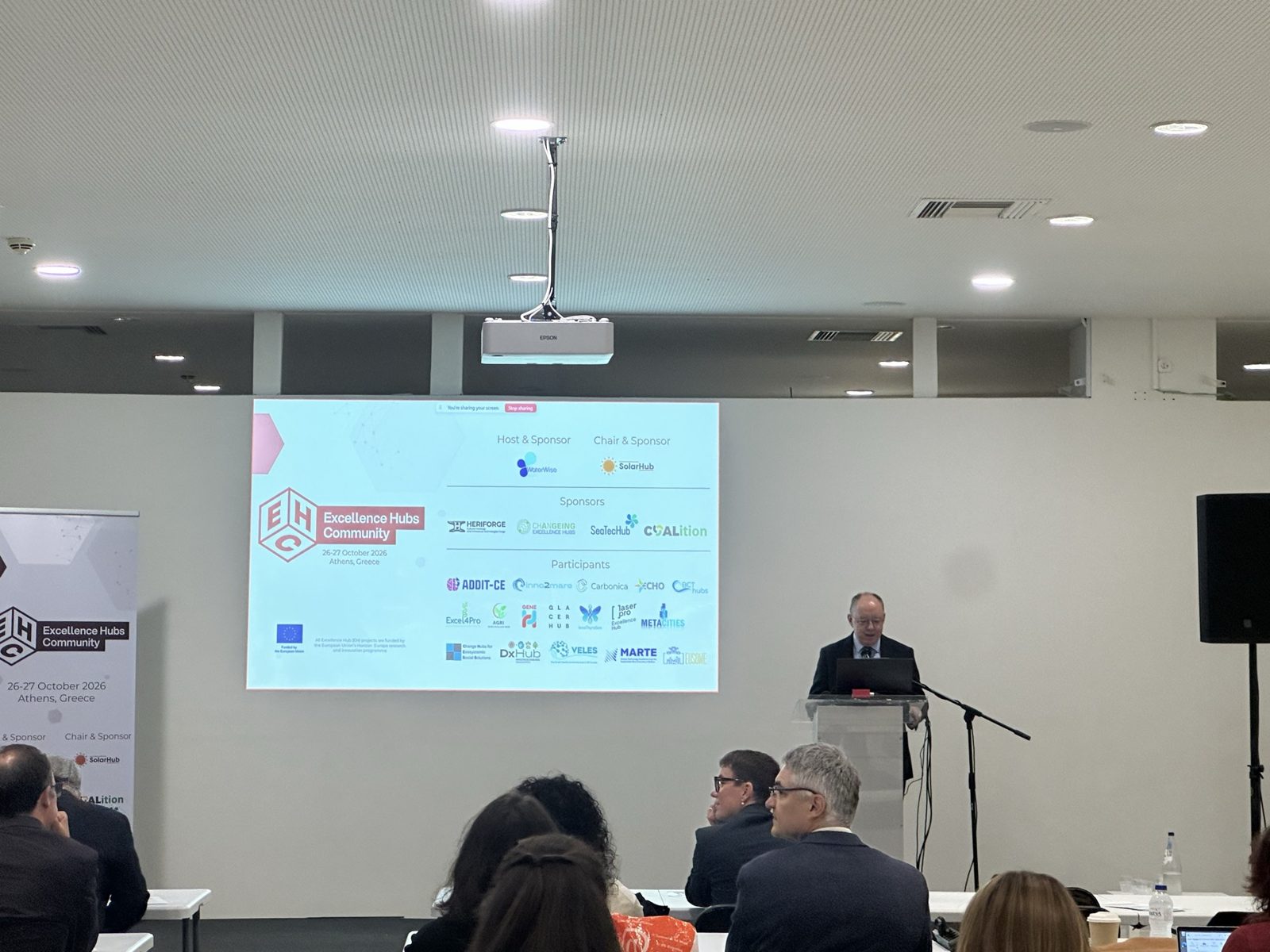
Opening of the EHC 2026 Joint Event at the Serafio Center, Athens 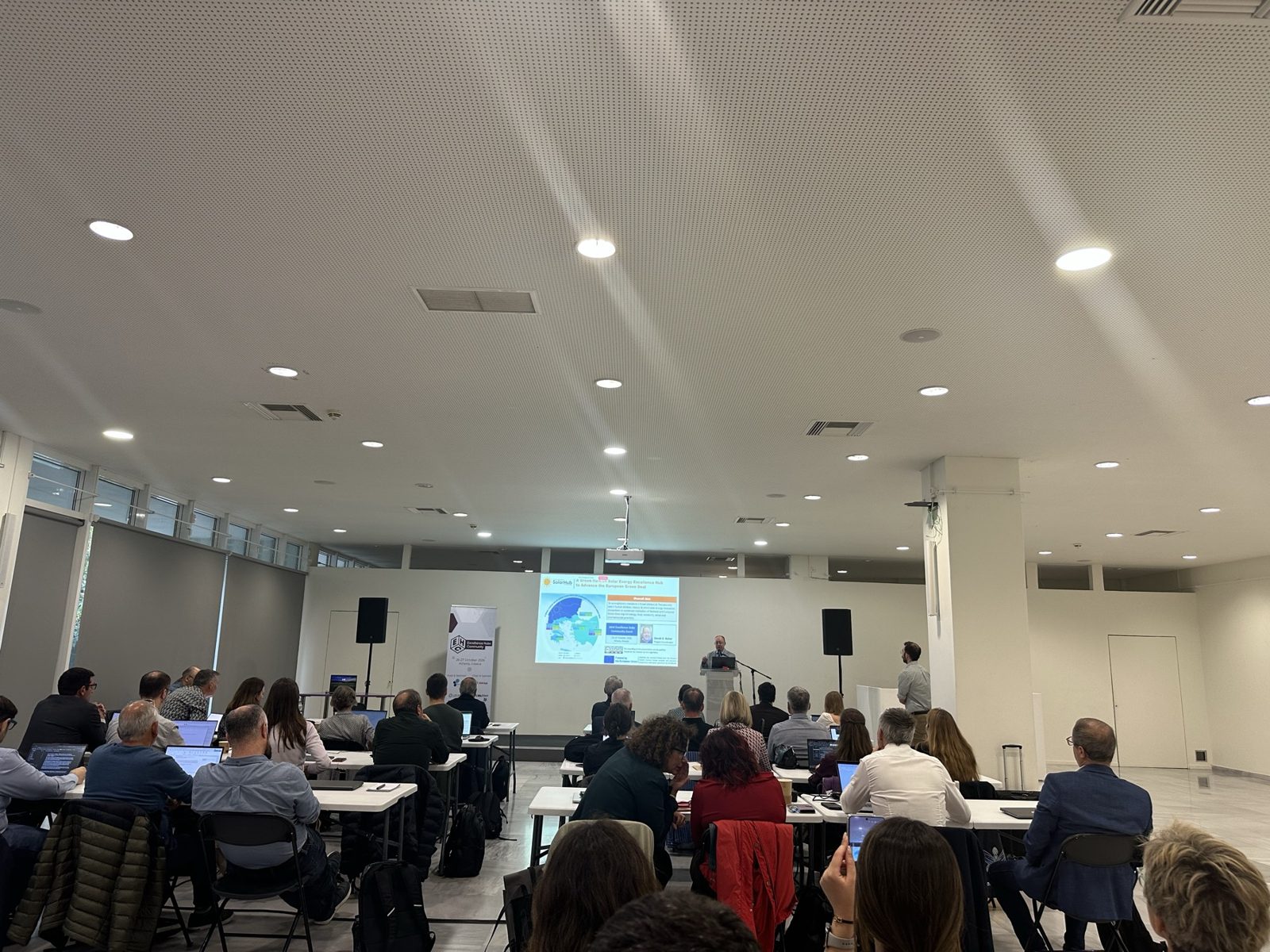
More than 100 participants registered for the two-day event 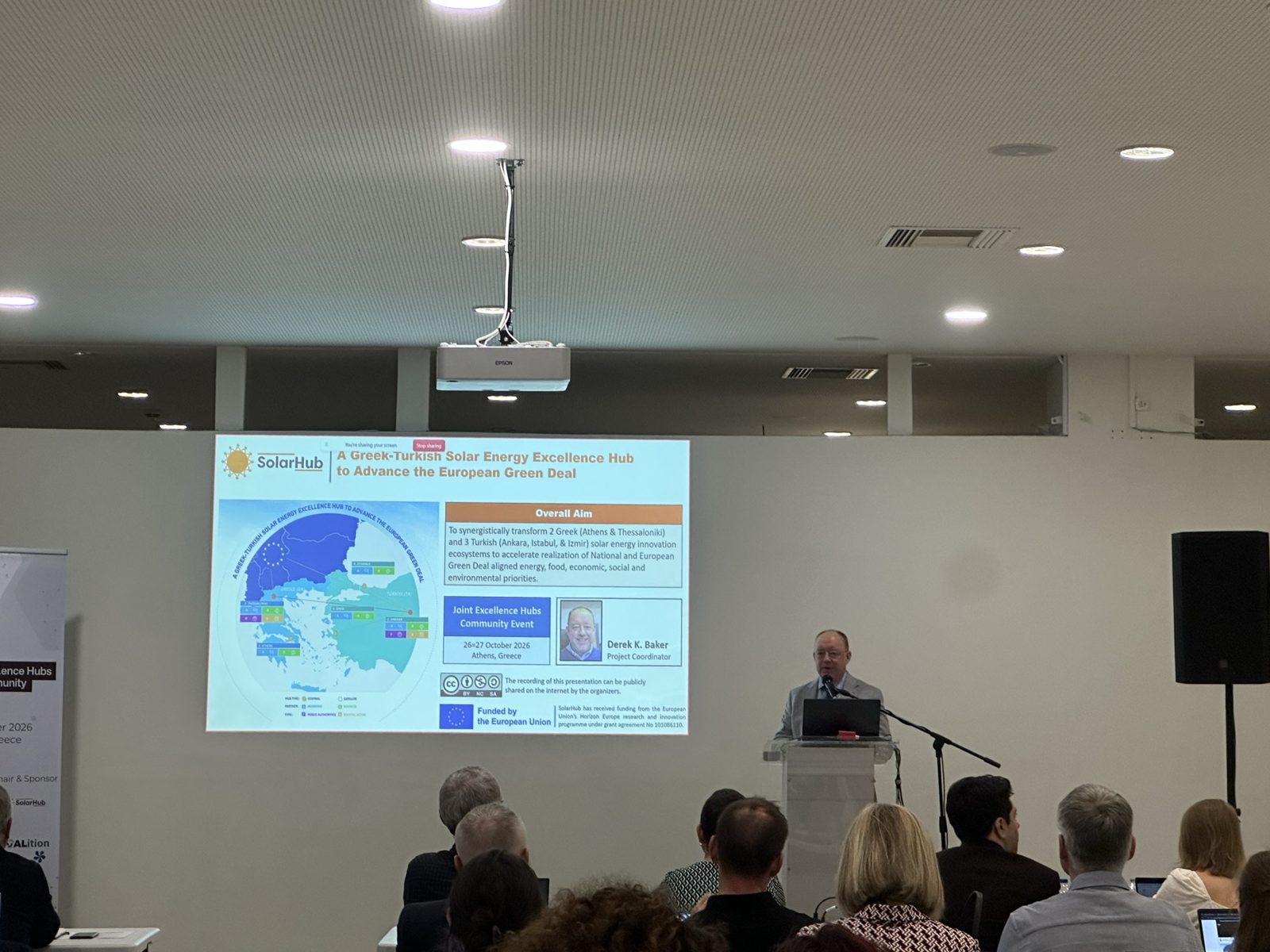
22 Excellence Hubs presented their results in thematic sessions 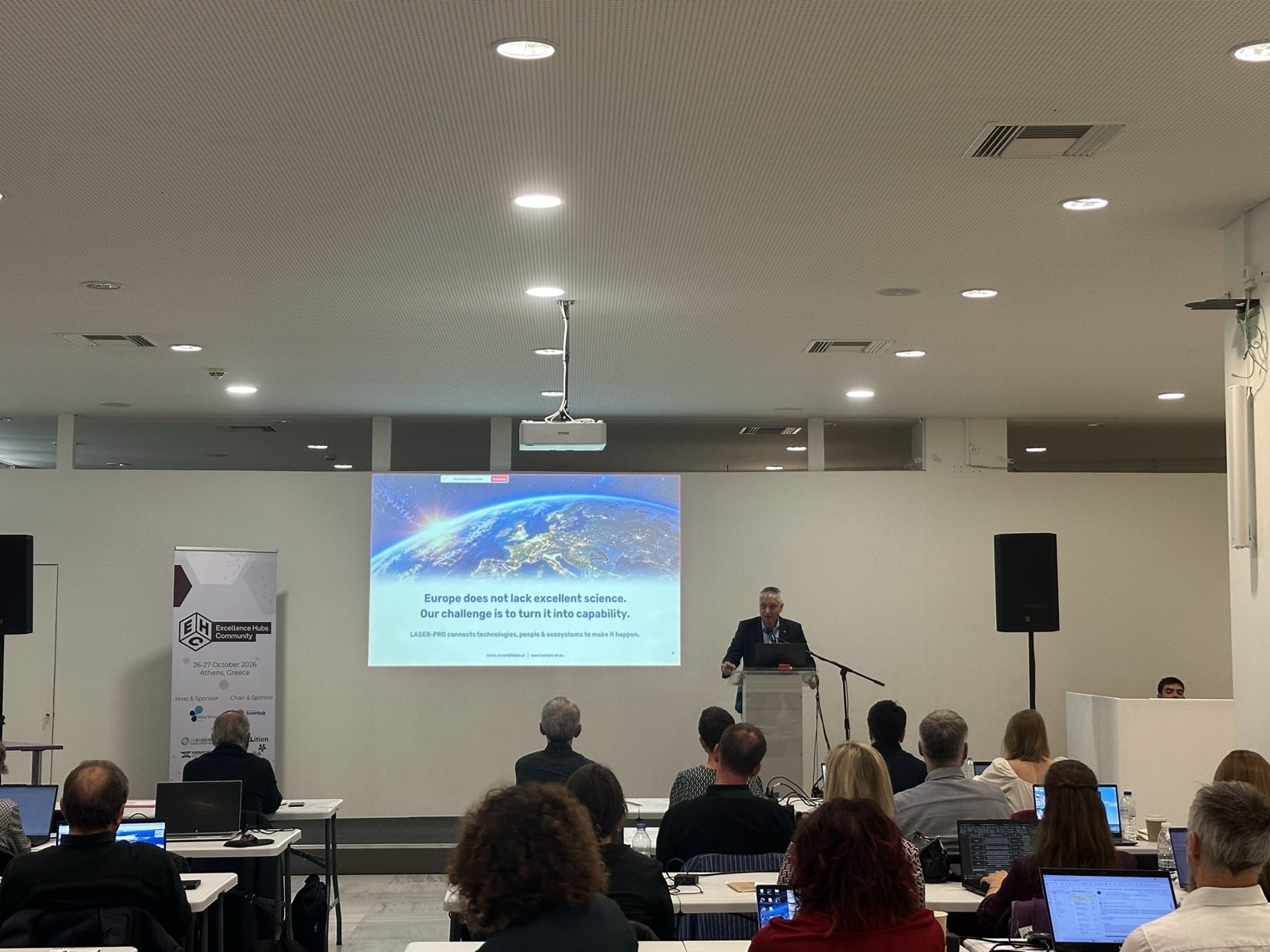
Plenary presentation in the main hall 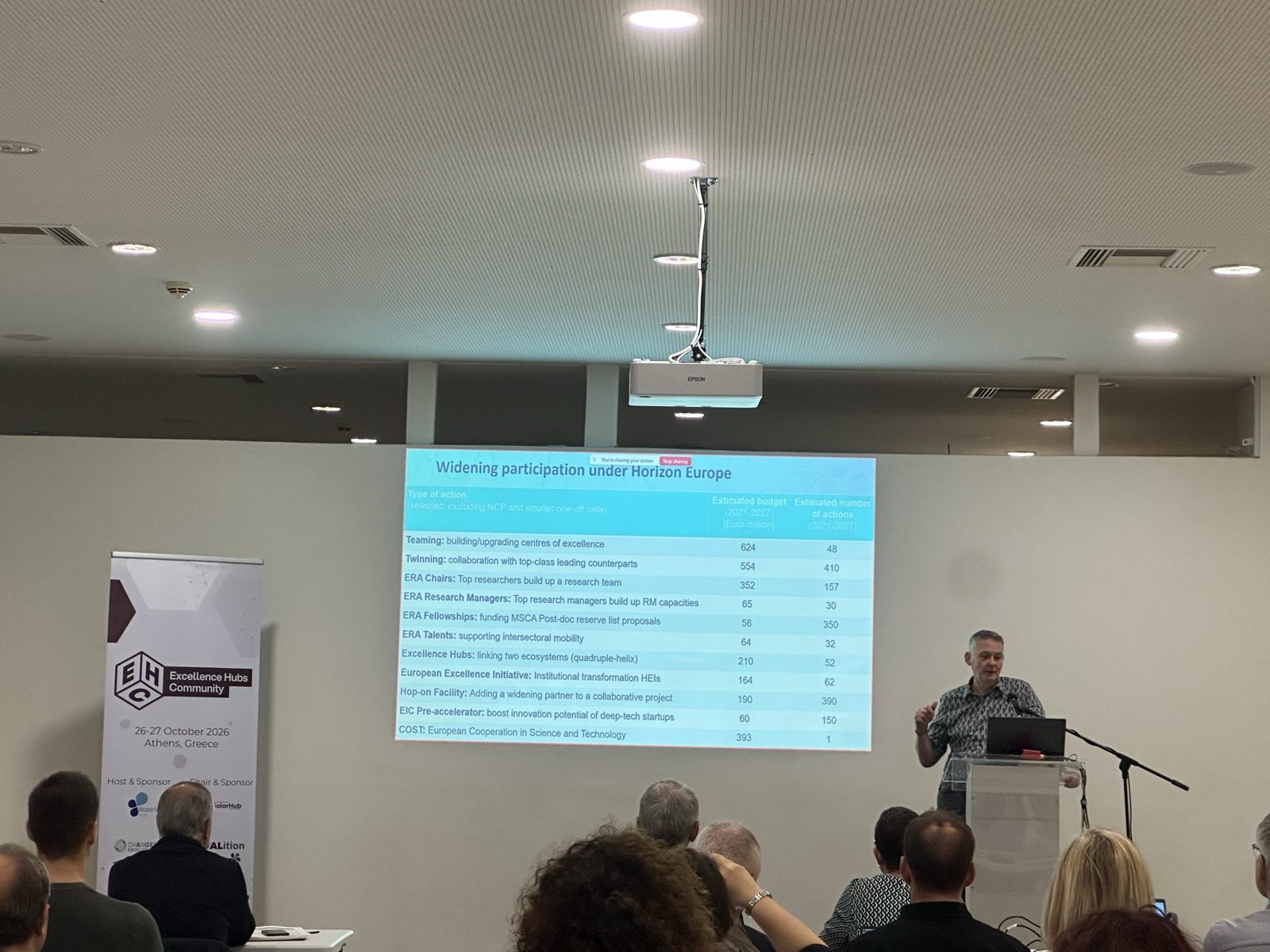
Widening participation under Horizon Europe 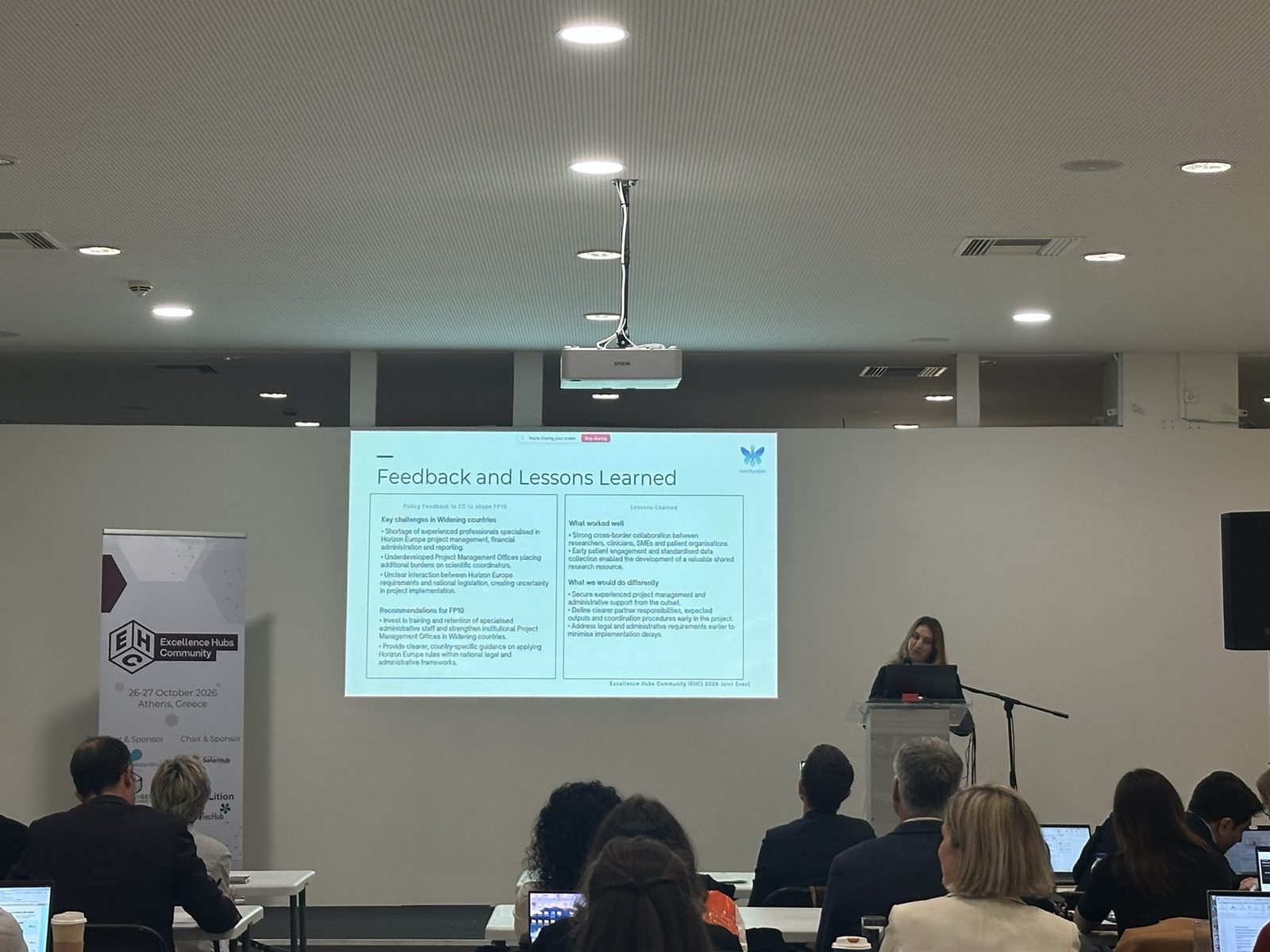
Sharing feedback and lessons learned across the Hubs 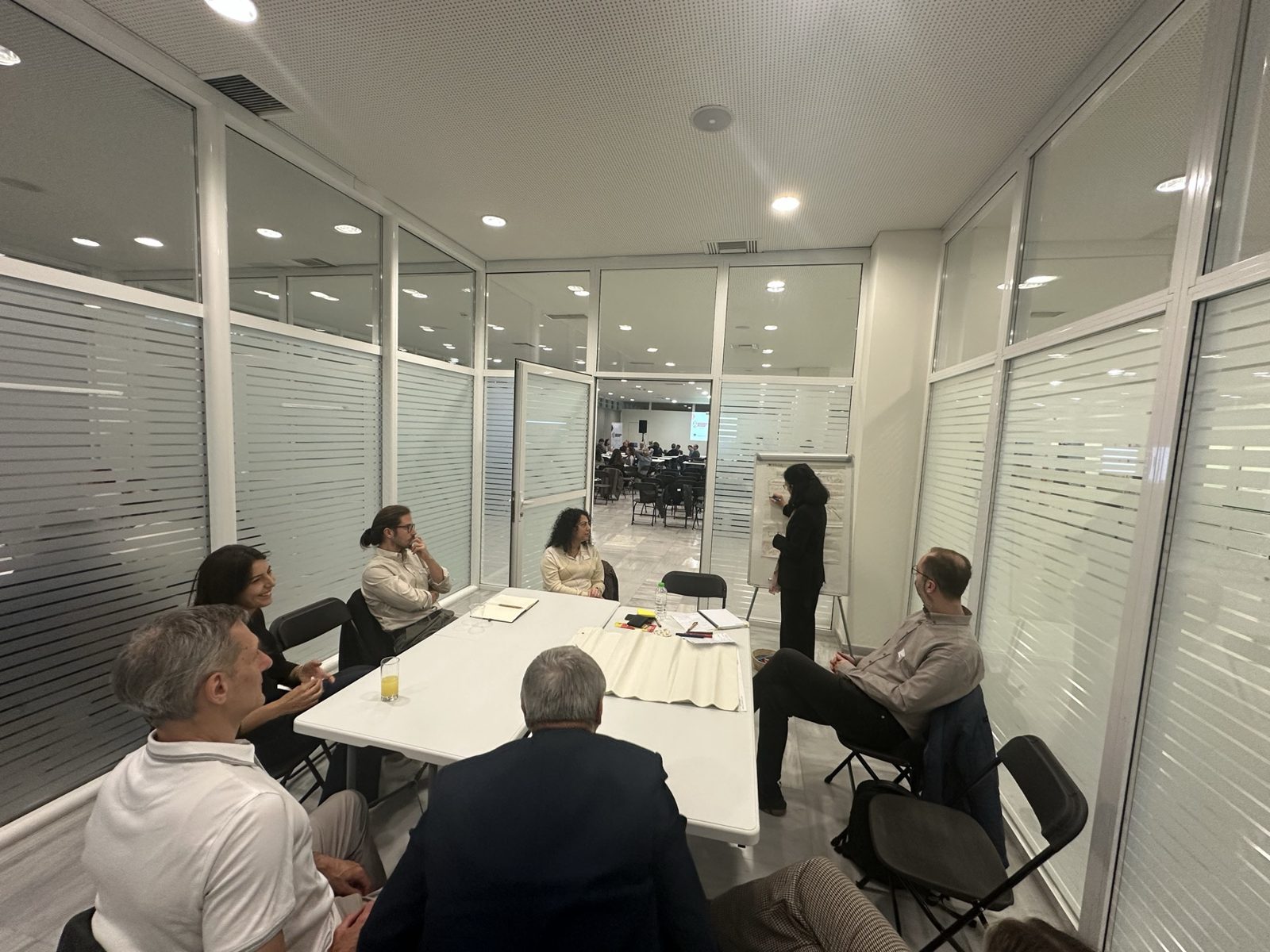
Parallel break-out session 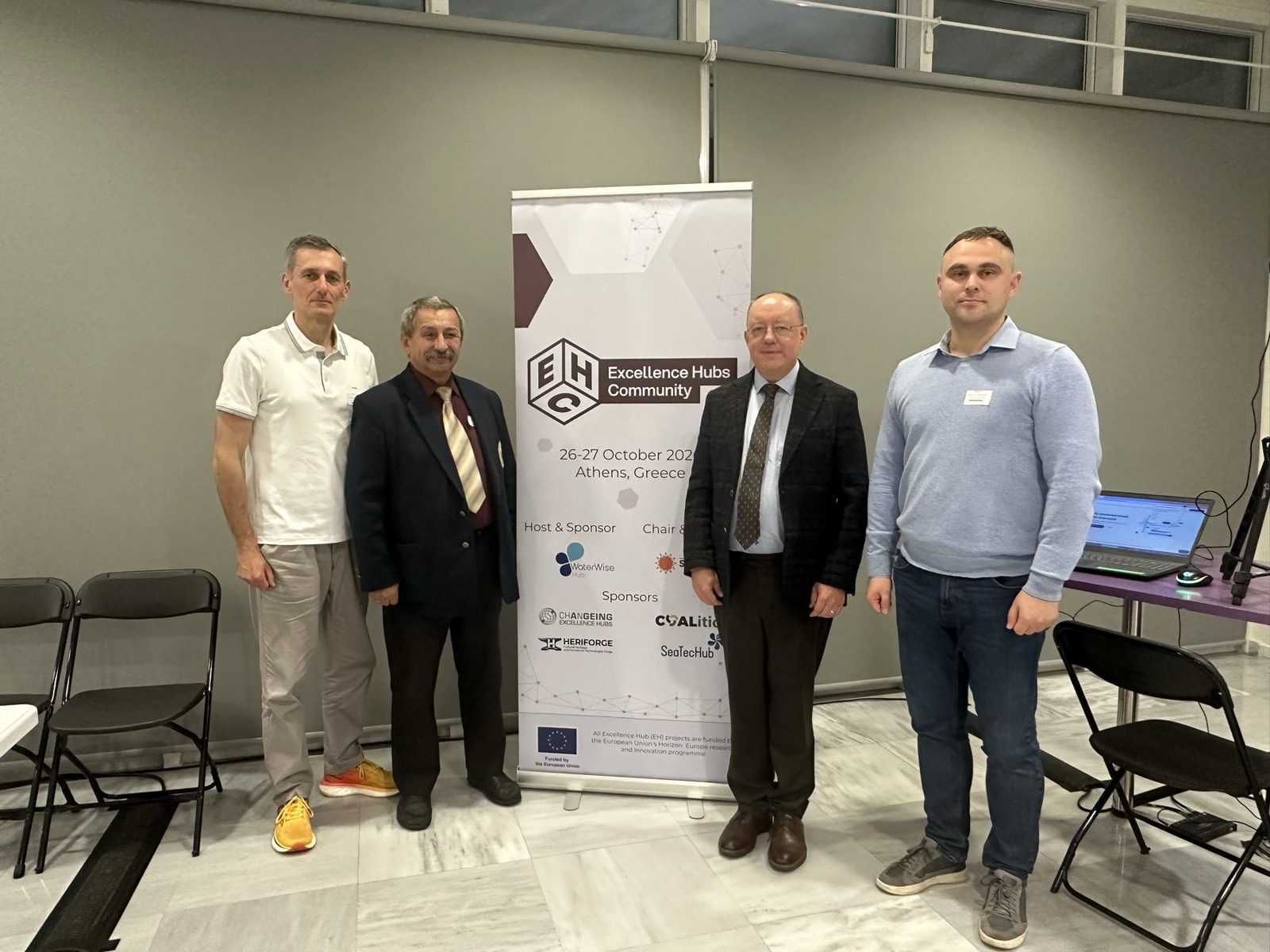
At the Excellence Hubs Community banner, Serafio Center 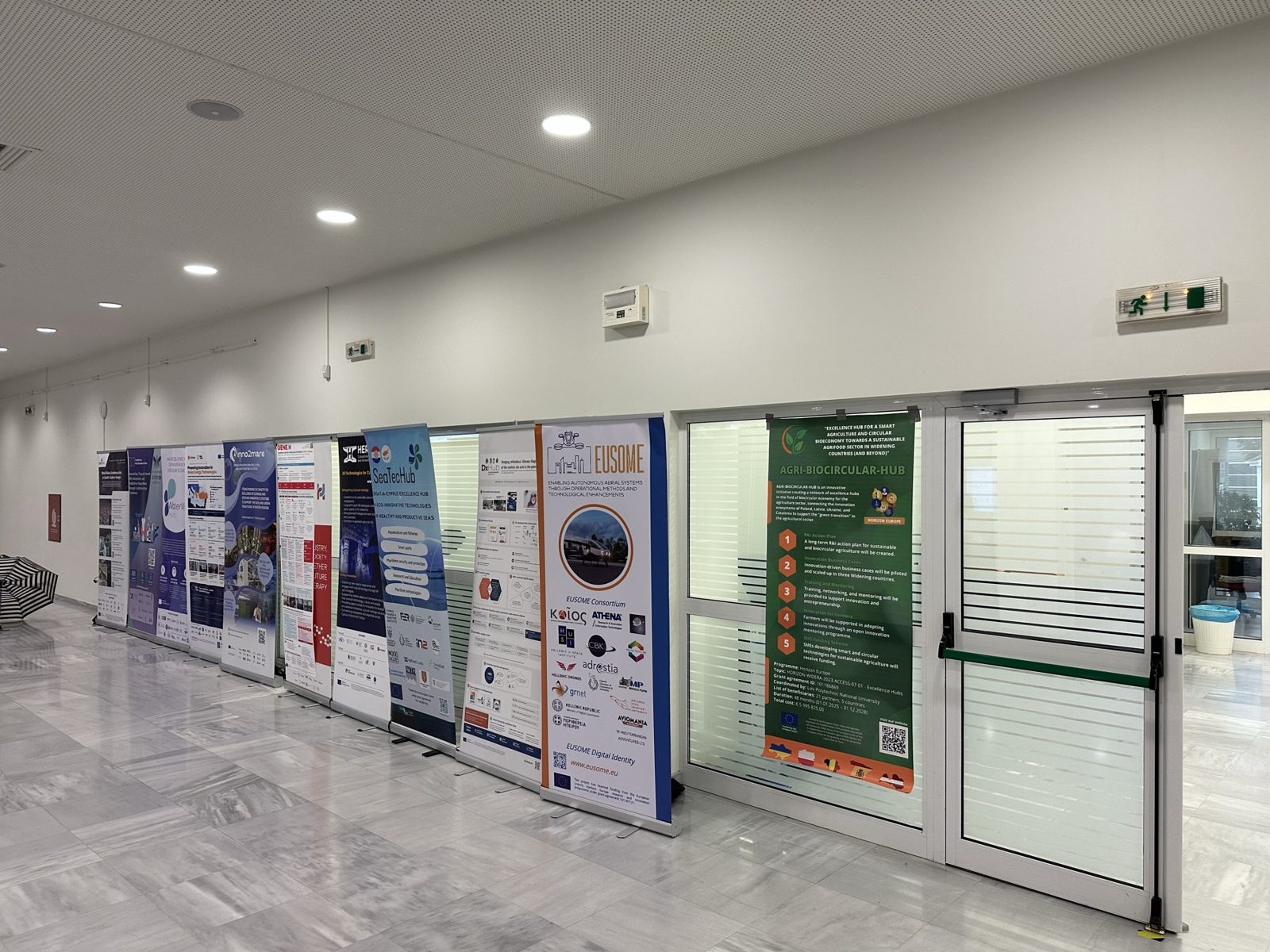
Poster exhibition of the Excellence Hubs 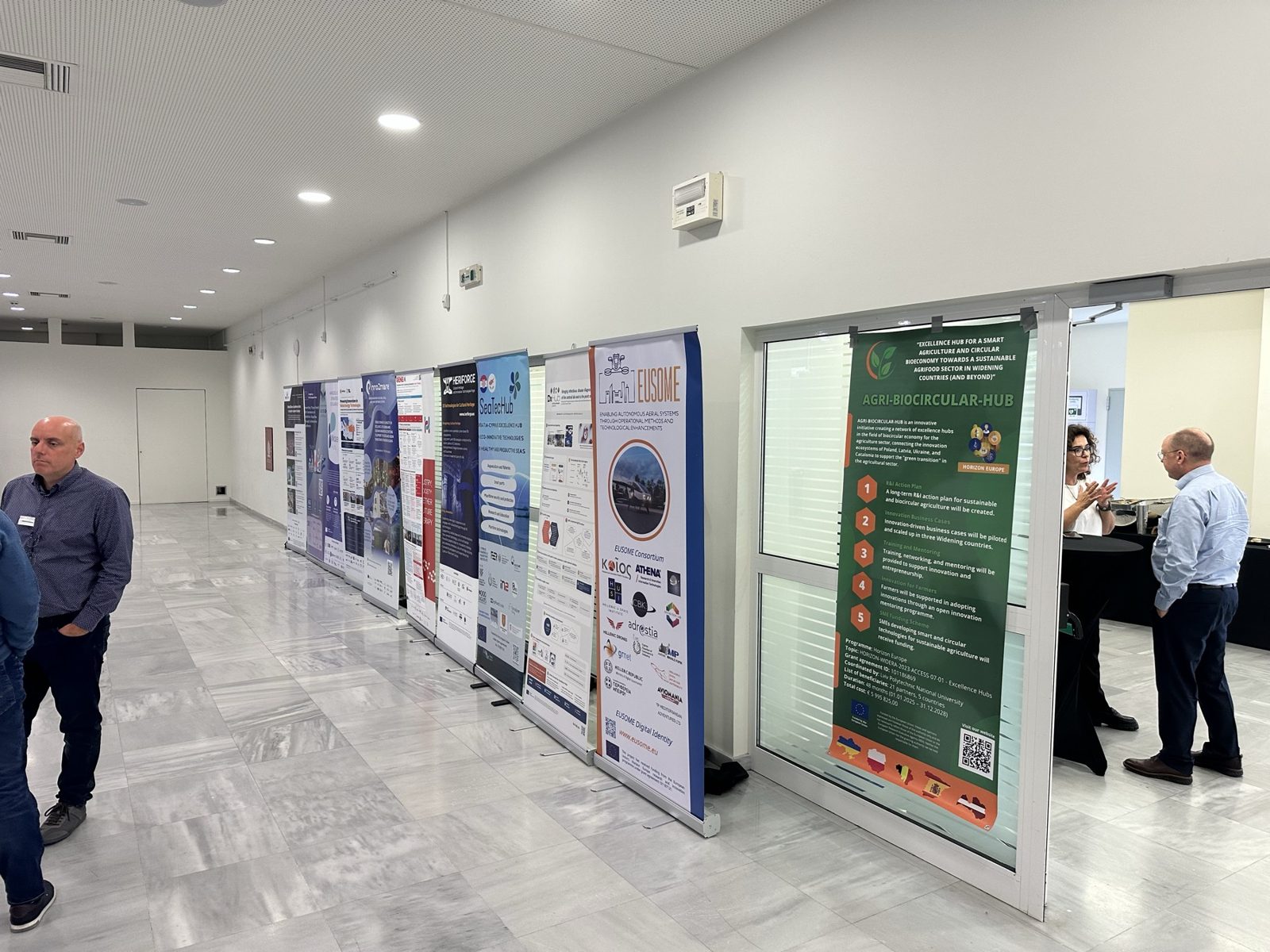
Networking between sessions 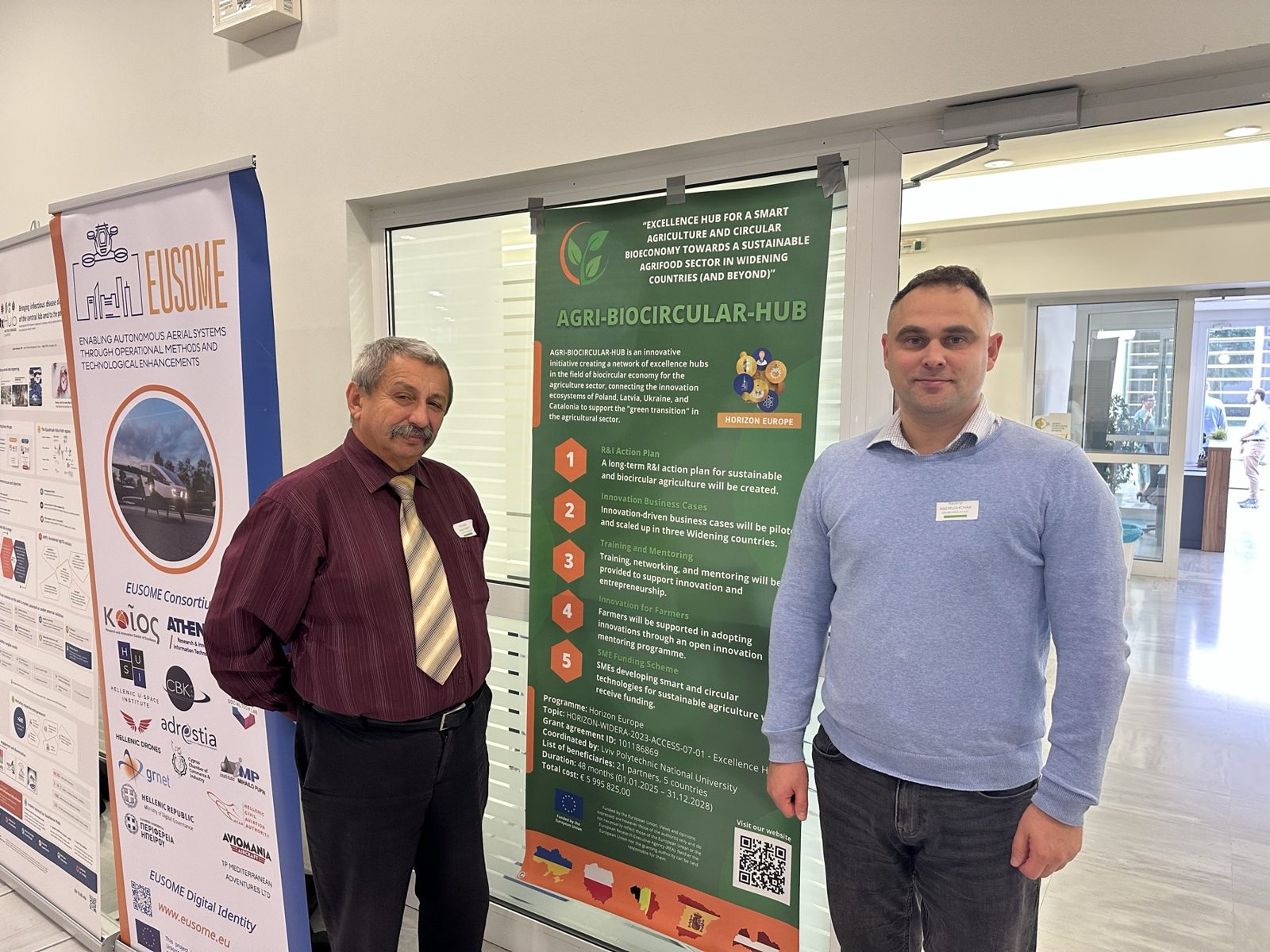
The AGRI-BIOCIRCULAR-HUB poster at the exhibition 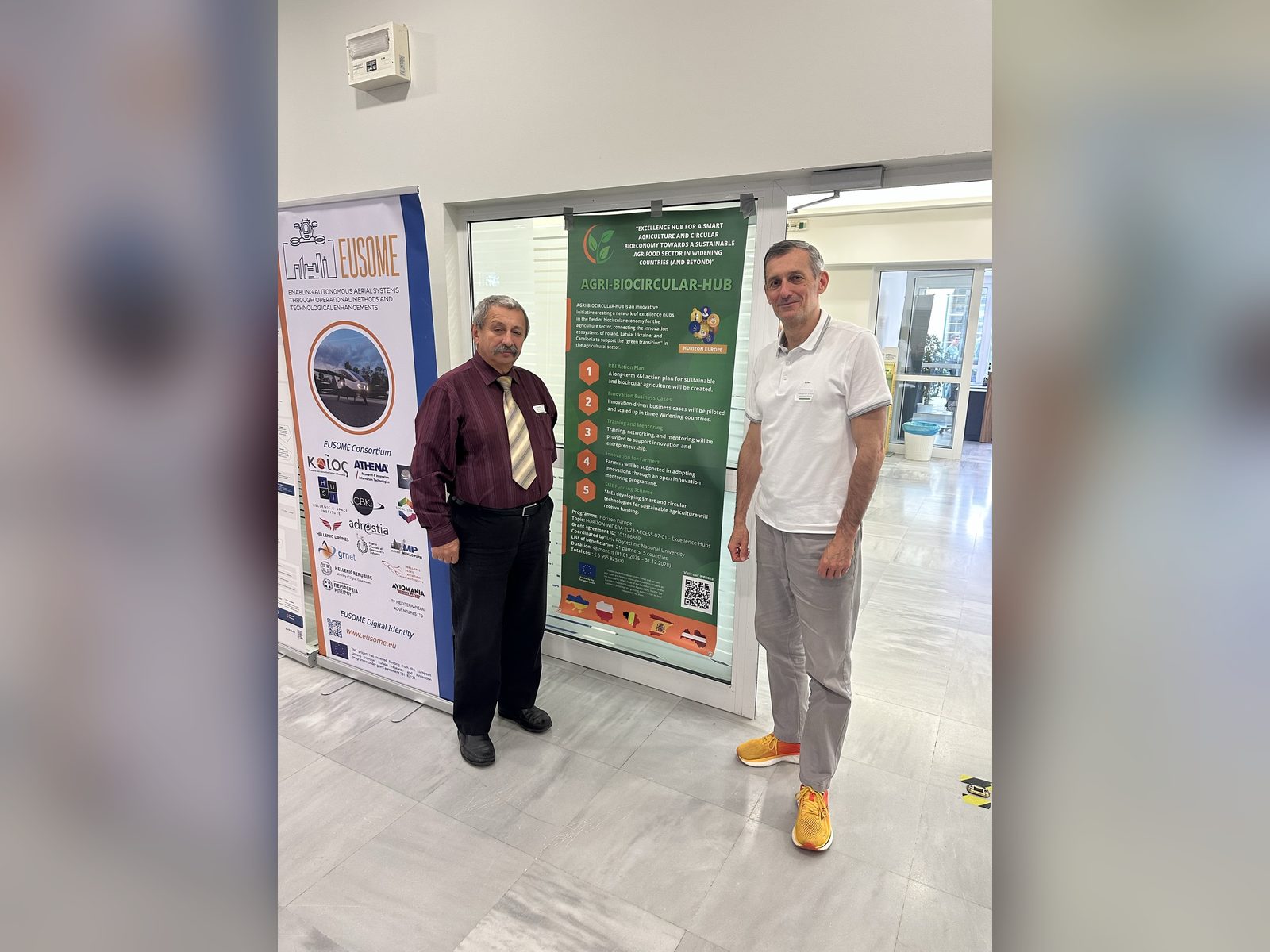
AGRI-BIOCIRCULAR-HUB at the Excellence Hubs poster exhibition
What it means for AGRI-BIOCIRCULAR-HUB
AGRI-BIOCIRCULAR-HUB started in January 2025 and is now close to the midpoint of its 48-month implementation. The team takes three main lessons from Athens.
- Sustainability planning cannot wait until the final yearThe Hubs that are completing their work in 2026 showed that lasting impact depends on decisions taken early: partnerships, services and funding sources that will outlive the grant. With the Financial Support to Third Parties open call for agrifood SMEs now completed, the project is moving into a phase where these decisions matter most.
- The thematic clustering of Hubs offers real opportunities for cooperationThe Water and AgriFood session and the WEFE break-out showed how close our themes are to those of other Hubs: smart agriculture, the circular bioeconomy and resource efficiency in the agrifood sector. Building on these links is a direct way to extend the project’s impact beyond its consortium.
- The policy dialogue on the future of Excellence Hubs is open, and Hubs from Widening countries have a strong stake in itAs a Hub coordinated by a Ukrainian university, AGRI-BIOCIRCULAR-HUB can bring a perspective on building innovation ecosystems in a country facing exceptional circumstances. The team intends to follow the joint policy brief and the discussion on the joint Widening funding instrument, and to contribute to them.
The event confirmed that Excellence Hubs are increasingly acting as a network rather than as individual projects. AGRI-BIOCIRCULAR-HUB will build on the contacts made in Athens in the coming months.
AGRI-BIOCIRCULAR-HUB (Excellence Hub for a Smart Agriculture and Circular Bioeconomy Towards a Sustainable Agrifood Sector in Widening Countries (and Beyond)) is funded by the European Union under Horizon Europe, Grant Agreement No. 101186869. Views and opinions expressed are those of the author(s) only and do not necessarily reflect those of the European Union or REA.